The Record Ridge Magnesium Project, located in the storied Rossland mining camp in southeastern British Columbia, contains over 10.8 million tonnes of recoverable magnesium.
West High Yield Resources retains 100% of the mineral rights to the Record Ridge Property which consists of 29 contiguous mineral claims, eight crown-granted claims, and one privately owned claim totaling 8,972 hectares. The known magnesium (“Mg”) mineralization is located within two of the mineral claims. The infrastructure for the proposed RRIM Project is located on mineral tenures controlled by the Company.
There is full infrastructure in placeincluding roads, highways, nearby rail, electrical power, water, and natural gas. The highly prospective project is just two miles north of the U.S. Border with supporting industries and rail hub and seaport nearby.
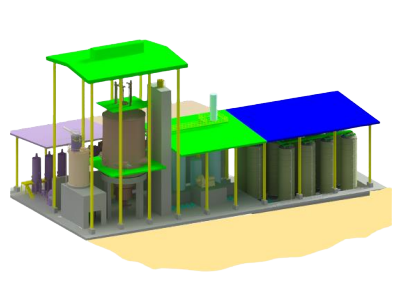
An advanced-stage green MgO Plant project with multiple critical and strategic mineral products. The plant will process high purity (over 99%) MgO and Mg(OH)2.
WHY Resources will employ a proprietary process producing premium (>98% and >99%) MgO and Mg(OH)2 products with nickel and silica byproducts.
PFS2 (2022) shows robust project economics with payback in 1.5 years.
The Rossland Gold Camp historically produced over 2.76 million ounces of recovered gold and 3.52 million ounces of recovered silver.
Historical gold production and geological work and drill holes conducted by WHY Resources’ results reinforce the potential of the Midnight Claim.
Since 2009, WHY Resources’ oversaw multiple drill programs and in 2022 focused on identifying extensions to zones within and peripheral to the OK and IXL historical mines, and deep targets below the known footprint of mineralization.
Multiple high-grade and visible gold assays were identified including:
MN22-04 54.05-55.25 metres depth – 38.4 g/t Au
MN22-05 69.95-70.25 meters depth – 311 g/t Au
MN22-09 205.1-206.6 metres depth – 37.9 g/t Au
MN22-13 72.35-72.65 metres depth – 154 g/t Au (visible gold)
Potential for 18K ounces of gold with over $30 million value.
Project Collaborators
Big Blue Technologies (BBT) is a Colorado-based company focused on developing high-temperature chemical processing solutions to aid in the production of magnesium ingots from magnesia feeds and other magnesium-bearing ores using aluminothermic reduction. BBT developed a green process to produce magnesium (Mg) ingots from magnesium oxide (MgO) and Mg ores. WHY and BBT signed MOU on October 5th, 2022, which contemplates that both companies will be working together towards entering into a definitive exclusive license agreement that grants WHY exclusive rights to BBT’s intellectual property in North America, Central America, and South America.
Galaxy is a direct source of magnesium, from mine to manufacturer, evolutionizing entire industries with light, strong, versatile, durable and energy-efficient magnesium. An international company based in the United States, Galaxy is streamlining global supply chains, offering both standard and custom alloys for unparalleled performance. Galaxy is helping to move the global economy from heavy metals to light metals of the future: clean, green, less carbon-intensive, bending the curve on climate change.
WHY and Galaxy signed Forward Contract LOI on December 7, 2021, and contemplates Galaxy purchasing a minimum of 200,000 metric tonnes per annum produced by the company from its Record Ridge deposit for a purchase price of USD$500 per Mt.
KPM is one of the leading R&D centres and mineral processing facilities in Canada that was established in 2002 and provide process development and optimization to chemical, mining, and metallurgical industries. Their services include experimental research for process development at lab/pilot scales, in addition to conducting techno-economic studies and modeling to support all aspects of new process design, development, and optimization. KPM helped WHY in the successful development and optimization of its proprietary HCl-based hydrometallurgical process.
Tenova was established in 1950 and is world-wide supplier of advanced technologies, products and services for the metal and mining industries. Tenova’s headquarters are located in Castellanza, Italy, and their offices and facilities spread out across six continents in 19 countries. Tenova provide innovative, sustainable, and integrated solutions for metals and mining for the objectives of cutting costs, saving energy, and reducing environmental impact.
Tenova supported KPM at the process development stage and completed detailed demo plant design with equipment list and project costs, which are included in the PFS report.
KON Chemicals Solutions is a private consulting company based in Austria and provides advisory for the development of innovative and sustainable solutions for new chemical and metal/mineral production plants. Their services include procurement, feasibility studies, and process design and development to commercialization. It will be represented in the Consortium by Dr. David Knolechner, owner.
KON CHEMICALS already supported KPM at the process development stage and will provide technical support and modelling/simulations during demo project development.
Seneca is a leading private consulting engineering company who offers complete professional services aimed at setting up industrial investment projects. With more than 100 experts, the company had successfully completed thousands of industrial projects in fifteen countries, ranging from existing plant modification to construction of complete commercial plants in EPCM management mode.
Our Process
WHY Resources as it continues in its phases of development will strive to become a leading sustainable, connected enterprise.
Achieving sustainability is a step-by-step process that starts with ensuring compliance and establishing a clear road map and continues with embedding it at the operational level.
We are committed to a sustainable future and to improving the social, economic, and environmental well-being of the community. We are dedicated to environmental improvements that foster a sustainable future and lead to social and economical improvements in the community we do business.
Further information on WHY Resources sustainability roadmap will follow as the project progresses into development activities and mining and aligns its environmental stewardship practices with the relevant UN sustainable development goals. Further, the Company will seek to incorporate sustainable mining standards from the Towards Sustainable Mining (TSM) program developed by The Mining Association of Canada.
Mining & Metals
Mining is essential to modern life because it provides the raw minerals and metals that power economies, industries, and technology. Materials such as copper, iron, lithium, nickel, and rare earth elements are extracted from the earth and used to build infrastructure, manufacture electronics, produce vehicles, and generate renewable energy technologies like wind turbines and electric vehicle batteries. Without mining, society would lack the foundational materials needed for construction, transportation, communication systems, and the transition to cleaner energy. As global demand for technology and infrastructure grows, responsibly sourced minerals remain critical to economic development and technological progress.
Magnesium is the eighth most abundant element in the Earth’s crust. It is found in large deposits in minerals such as serpentine, magnesite and dolomite as well as sea brines.
Anticipated future design changes incorporating lighter metals such as magnesium point to dramatic increases in demand for magnesium in the automotive industry, aerospace, rail, and other transportation industries. Other future growth in Magnesium Oxide applications includes magnesium batteries, magnesium wallboard, and cement.
Silicon dioxide, also known as silica, is an oxide of silicon with the chemical formula SiO2, most commonly found in nature as quartz and in various living organisms.
Silica is used in semiconductor manufacturing, solar panels, structural materials, electrical insulation, glass manufacture, microelectronics, food and pharmceutical industries.
Nickel is a silvery-white lustrous metal with a slight golden tinge.
Only small amounts of pure native nickel is found in Earth’s crust, typically in ultramafic rocks, and in the interiors of larger nickel–iron meteorites not exposed to oxygen outside Earth’s atmosphere.
Nickel is used for metal plating, corrosion resistance, desalination, marine design, power storage, hydrogenating vegetable oils and coinage.
Iron is a shiny, greyish metal that rusts in damp air. It has the symbol Fe and atomic number 26 on the periodic chart. Iron, by mass, is the most common element on Earth, right in front of oxygen, and the fourth most common element in the Earth’s crust.
Iron is used in pigmentation, steel manufacture, civil engineering, magnets, ammonia production and is integral to our blood carrying oxygen.